Troubleshooting & Analysis
The $24 that almost made me buy a whole new shaver
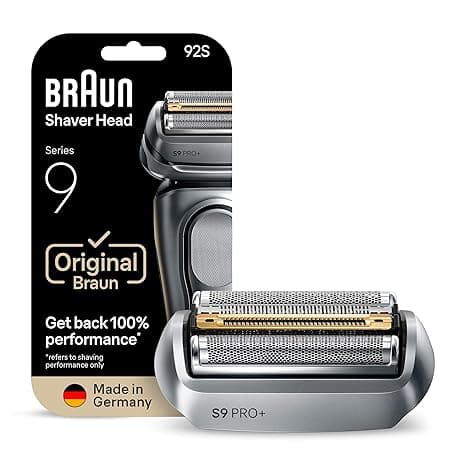
I stood in the bathroom holding my Braun Series 9 like it had personally insulted me. The shave that morning had been awful — that hot, scrapey drag where the foil pulls a whisker out by the root before it cuts it. Razor burn down the jaw by 9 a.m. So I did what everybody does: I went looking for a fresh 92S cassette head. Braun's own replacement? Forty-six bucks the day I looked. Forty-six dollars for a strip of foil and a cutter block. I actually sat there doing the math on whether a brand-new mid-range shaver was the smarter buy.
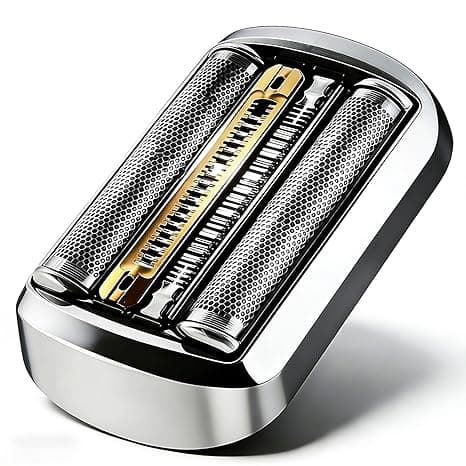
Then I found the compatible 92S head for $22. Same cassette shape, same snap-in mount. Twenty-four dollars less for what is, mechanically, the same part. And I'll be honest — I didn't believe it. A foil that thin, made by somebody who isn't Braun, sitting against my face every morning? I figured I'd get a tinny shave and a rash. I bought it anyway, mostly out of spite toward that $46 sticker.
What you're actually paying for with OEM
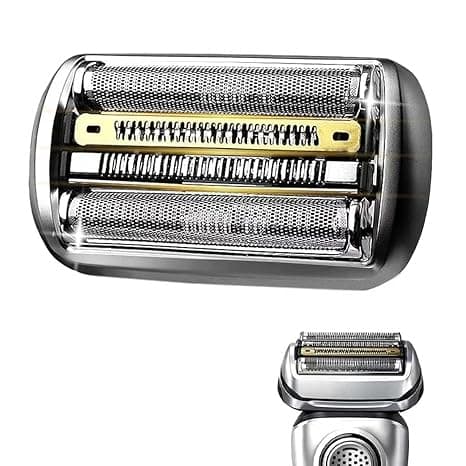
Here's the thing nobody at Braun wants framed plainly: the 92S is a wear part. The foil is a perforated sheet of metal and the cutter block underneath is a row of tiny blades. They dull. Every shaver head does, OEM or not, usually somewhere around the 12-to-18-month mark depending on how coarse your beard is and whether you rinse it after each shave. So you're not buying a permanent component. You're buying a consumable that you will replace again. At $46 a pop, that's a recurring tax. At $22, it's an annoyance.
Run the annual number if you shave daily with a heavy beard and burn through a head a year: that's the difference between a $46 line item and a $22 one, every single year, for the life of the machine. Over the five or six years a Series 9 body will keep running, the OEM path costs you well over a hundred dollars more in heads alone. Same shave. That gap is the entire reason this site exists.
Does it actually fit?
This was my real worry, because a head that sits a half-millimeter proud is a head that chatters and nicks. The install is genuinely a ten-second job — you press the two release buttons on the sides of the shaver, the old cassette pops free, and the new one snaps down until you feel and hear it seat. That click matters. If you don't get a clean click on both sides, you didn't get it home; press again until it sits flush.
On mine it seated correctly on the first try. The frame tolerance is a hair looser than the Braun original — I could feel a tiny bit more play when I wiggled it, the kind of thing you'd never notice mid-shave but you notice when you're paranoid and poking at it. It did not rattle in use. After the first shave I stopped thinking about it entirely, which is the highest compliment you can pay a part like this.
One small tip the box buries: put a single drop of light machine oil (sewing-machine oil, clipper oil, whatever you've got) on the foil before the first run. Smear it across, run the shaver dry for a few seconds, wipe the excess. It quiets the motor and helps the new cutter block break in smoother. Took the faint mechanical whine right out of mine.
The honest downsides
I'm not going to pretend this is a flawless swap. A few real things.
First: the first two or three days, there's a faint plastic-and-metal smell when the shaver warms up. Not strong, not chemical-burn bad, but it's there, and on a part that's an inch from your nose you'll catch it. It faded completely by day four for me. If you're sensitive to that kind of thing, know it's coming.
Second: the break-in is real. Out of the box, the very first shave was a touch grabbier than my old worn-out OEM head on its best day — new cutters need a few sessions to settle against your particular beard. By the end of the first week it was cutting noticeably closer and smoother than the tired Braun head I'd replaced. But that first morning, I'll admit, I had a flicker of "did I just waste $22." I didn't. Give it the week.
Third, and this is the most honest one: the packaging is cheap. Thin blister plastic, a folded slip of instructions printed slightly crooked. It doesn't feel like the $46 Braun box. If the unboxing experience is part of what you're paying for, you won't get it here. The part inside, though, is the part that touches your face — and that part is fine.
Where it sits a touch behind OEM: on the very closest, against-the-grain neck passes, the genuine Braun foil still has a slight edge in glide. We're talking about the last five percent of closeness, the kind that only matters if you're chasing a baby-smooth finish on sensitive skin. For an everyday clean shave, I genuinely cannot tell the two apart anymore.
Why a dead head isn't just a comfort thing
Worth saying plainly: a dull 92S doesn't just shave worse, it shaves rougher. Worn cutters stop slicing and start tugging, and that tug is what gives you the razor burn and the ingrown hairs along the jaw and neck. People blame their skin. It's usually the head. Running a shaver six months past its prime to save the replacement cost is a bad trade — you're paying for it in irritation every morning. Swapping the head on schedule is the cheapest skincare decision you'll make, and at $22 there's no excuse to limp along on a dead one.
So who should buy what
If you've got skin that reacts to everything, or you're the kind of person who wants the absolute factory-perfect closest shave and the OEM box on the shelf, buy the genuine Braun head and don't think twice — that's a legitimate preference and $24 a year isn't going to change your life either way.
For everybody else — and that's most of us — the compatible 92S does the same job, snaps into the same mount, and gives you a clean daily shave for $22 instead of $46. I bought it skeptical, broke it in over a week, and I've already ordered a second one to have on the shelf. Same shave, twenty-four bucks lighter, every year. That's an easy call, and I've made it.