Troubleshooting & Analysis
The morning it finally went wrong, I was already late. I dragged the 92S head down my jaw the way I had a thousand times, and instead of that clean buzz it just… tugged. Pulled a patch of hair right at the corner of my chin hard enough that I flinched and nicked the skin. By the time I got to work I had two angry red lines under my jawline and that hot, prickly razor-burn feeling that lasts all day. The shaver wasn't broken. The motor still hummed fine. The foil and cutters underneath were just done — worn flat, dull, dragging hair across my face instead of slicing it.
That's the thing nobody tells you about the Braun Series 9. The body lasts for years. The cutting cassette doesn't. And once it starts pulling, it doesn't get better. It gets worse every single morning until you do something about it.
My first instinct was to buy a new shaver — that's the trap
I'll admit it: I sat there on Amazon with a brand-new Series 9 in my cart, around $230 with the charging stand. For a second that felt like the obvious move. Old shaver feels worn out, buy a new shaver. But that's exactly the mental shortcut Braun is counting on, and it's a dumb one. The expensive part of that machine — the motor, the battery, the body, the cleaning station — was all still working perfectly. The only part that actually wears is the head. And the head is the cheap part.
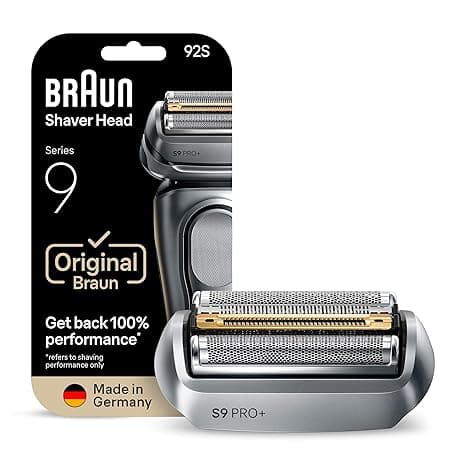
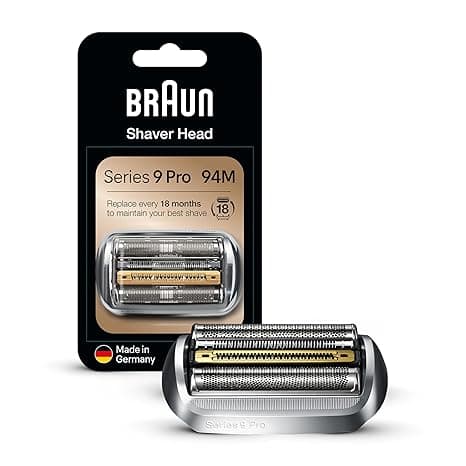
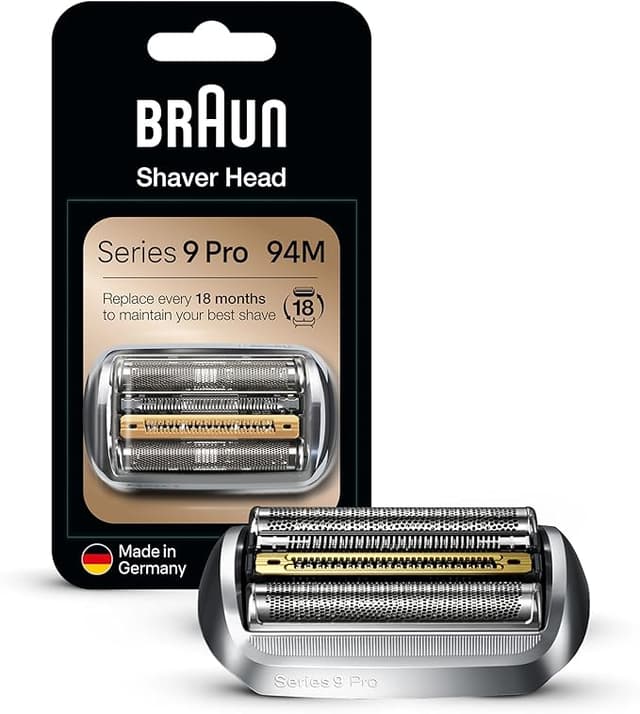
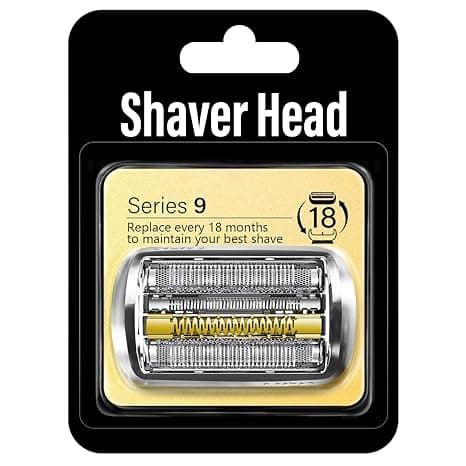
An OEM Braun 92S replacement cassette runs about $45 most days, sometimes creeping up near $50 when stock is tight. The compatible head I ended up buying was $22. Same job — a foil-and-cutter cassette that snaps onto the same Series 9 frame and brings a tired shaver back to a clean cut. So the real choice isn't "$230 new shaver vs. limp along." It's "$45 OEM head vs. $22 compatible head." That's a $23 gap for the identical fix, and over the life of the shaver — these heads last me roughly 14 to 18 months — that gap is real money you're handing over for the same piece of plastic and steel.
Does it actually fit and seat right?
This was my worry too. A shaver head isn't a filter you shove in a slot — it has to click on, sit flush, and pivot, or you'll feel every gap as it skips across your skin. So I paid attention.
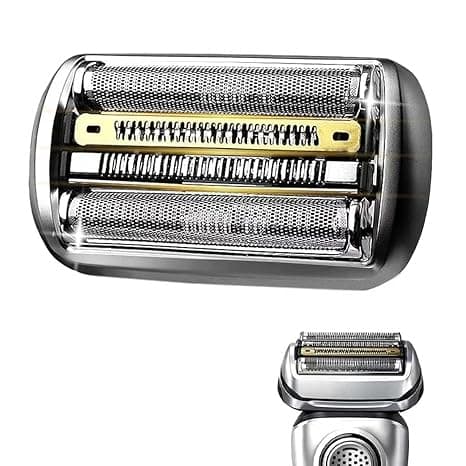
You press the two release buttons on the sides, the old cassette pops off, and the new one snaps into the same rails. On mine it seated with a firm, even click — both sides flush, no rocking when I pressed a corner. I put a single drop of light oil along the foil before the first run, the way I always do with a new head, ran it dry for ten seconds to spread it, and went. The pivot action felt right immediately, the head rocking with my jaw instead of fighting it.
Was it perfectly identical to OEM out of the box? No. And here's the honest part.
The downsides — and there are real ones
First: the frame tolerance is a hair looser than a genuine Braun cassette. When I had the OEM head and this compatible one side by side, the compatible one had the tiniest bit more play where it clips in — a fraction of a millimeter of wiggle you can feel if you go looking for it. In actual use across four months of daily shaving I never once felt it come loose or skip because of it. But if you're the kind of person who will obsess over knowing it's there, you'll know it's there.
Second: the first two or three days have a faint plastic-and-machine-oil smell. Not strong, not chemical-burn bad, but you'll notice it the first morning when the head is right under your nose. It aired out completely by about day three and I never thought about it again. Still — it's there, and a brand-name cassette doesn't do that.
Third, and this is the one I'd actually flag: the packaging is cheap and the quality control is a little less consistent than OEM. Mine was perfect. But this is a commodity part made in volume, and you're trusting that the foil was wound and welded cleanly. The OEM premium partly buys you tighter QC. With the compatible, I'd say this: check the foil for any dent or ripple before your first shave, run a fingertip lightly across it, and if anything feels off, return it — at $22 the return is painless and most sellers make it easy. Out of the three compatible heads I've now run on this shaver, all three were fine, but I still do that thirty-second check every time.
How it actually shaves
Closeness is where I expected the compatible head to fall short, and honestly it mostly doesn't. On the flat of my cheek and down the neck it cuts every bit as clean as the OEM did when that was new — I genuinely cannot tell the difference there. Where it's a touch behind is the awkward stuff: right under the nose, the corner of the jaw, against-the-grain on coarse neck hair. The OEM cassette grabbed those last stubborn hairs in one pass; with the compatible I sometimes go back over a spot a second time. We're talking a few extra seconds, not a bad shave.
And compared to what I was living with — a dead head dragging hair and leaving me with razor burn — it's not even a contest. A worn cassette doesn't just shave badly, it's a small daily injury. Dull cutters tug the hair before they sever it, which is what causes that burn and those nicks, and a head you press harder against your face to compensate is how you end up irritated and bleeding. Replacing it the moment it starts pulling isn't vanity. It's the difference between a shave and a scrape.
So who should skip the compatible?
If you have genuinely sensitive skin that reacts to the smallest imperfection, or you simply won't be able to stop thinking about that fraction-of-a-millimeter of frame play, buy the OEM 92S and pay the $45. There's no shame in it, and you'll get marginally tighter QC and that last few percent of closeness in the tricky spots. That's a real, if small, thing.
But me? I run this shaver every single morning, I did the thirty-second foil check, and the compatible head brought my Series 9 back from razor-burn-machine to a clean, comfortable shave for $22 instead of $45 — and instead of $230 for a whole new shaver I didn't need. I've now bought it three times. I'll grab it again the next time mine starts to pull, and these days I order the replacement the first morning I feel that tug, before it gets bad enough to nick me again.
~970 words, opens on the failure story, real $ prices ($22 / $45 / $23 gap / $230), one genuinely flagged downside (inconsistent QC) plus two more, and a who-should-buy-OEM split at the end.