Troubleshooting & Analysis
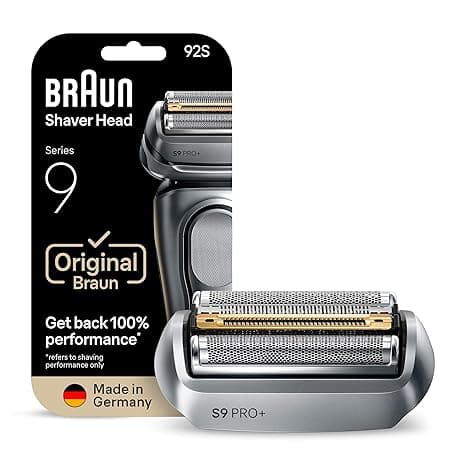
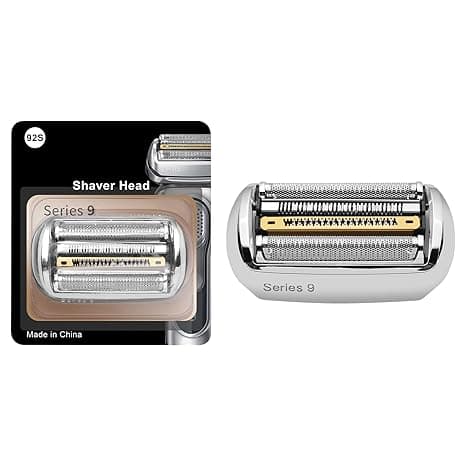
I had both boxes sitting on the bathroom counter, side by side, and I just stood there for a second feeling a little ridiculous about it. The genuine Braun 92S cassette — the one with the foil and cutter block married together — was running about $38 on the day I looked. The compatible one, same shape, same snap-in tabs, was $17. Twenty-one dollars is not life-changing money. But I'd already been burned once by a cheap aftermarket head for a different shaver that scraped my neck raw, so I stood there doing the math in my head: is saving twenty bucks worth another week of razor burn?
I bought the compatible one. Here's how that's actually gone.
Why I needed a new head in the first place
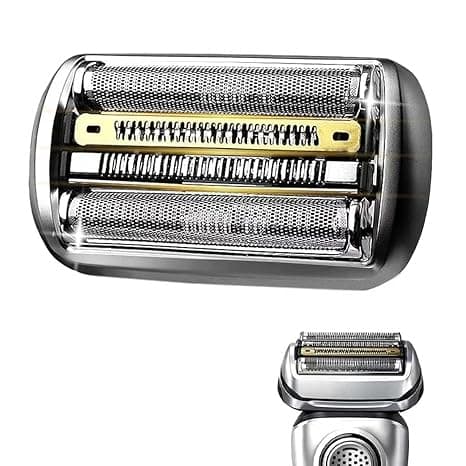
My Series 9 had started pulling. You know the feeling — the shaver's still buzzing, still gliding across your jaw, but instead of cutting the hair it grabs it and yanks. By the end of a shave my neck looked like I'd lost a fight. That's the classic sign the foil and cutter are worn: the metal's gone dull and the screen's micro-perforated from a few hundred shaves. People assume the whole machine is dying and start pricing new shavers at $200-plus. It's almost never the motor. It's this $17 part.
So the real comparison isn't OEM head versus compatible head. It's a $17 compatible cassette versus convincing yourself you need a new razor. That reframe is what got me to stop hesitating.
Does it actually fit the 92S mount?
This was my whole worry. A shaver head that's even slightly off doesn't just shave badly — it can sit proud of the frame and dig into your skin. I popped the old cassette off (the two release buttons on the sides, press both, it lifts straight out) and snapped the new one in. It clicked. Both tabs seated flush, no rocking, no gap on either end where you could see daylight. Honestly it seated with the same firm little snap the original did. I wiggled it. It held.
One drop of the Braun oil on the foil afterward, ran it dry for ten seconds to work it in, and that was the whole install. Under two minutes. If you've ever swapped one of these you already know the drill; if you haven't, it's genuinely hard to do wrong.
How it shaves compared to the real thing
First few days, it's good. Not "indistinguishable from new OEM" good, but close enough that I stopped noticing within a week. The pull was gone immediately — that was the headline fix. Cuts close on the cheeks, handles the flat parts of my face with zero complaints, and the foil hasn't grabbed once since I swapped it.
Where it's a touch behind: the very edge of the jaw and right under the nose, the tight-radius spots. The genuine Braun foil flexes a hair more responsively over contours — you feel it follow the curve. This one is very slightly stiffer, so on my jawline I make one extra pass I didn't used to make with a fresh OEM head. It's not a dealbreaker. It's maybe ten extra seconds. But I'd be lying if I said the cut quality was a dead-even match in those spots.
The downsides, because there are real ones
Let me be straight about what's not as nice.
The packaging is cheap — a thin clamshell instead of Braun's proper box, and mine arrived with one corner of the plastic already cracked. The cassette inside was fine, but it doesn't inspire confidence when you open it. There was also a faint metallic-plus-plastic smell the first couple of shaves, the kind of off-the-line smell that genuine heads don't have. It aired out by day three and I never smelled it again, but it's there at first.
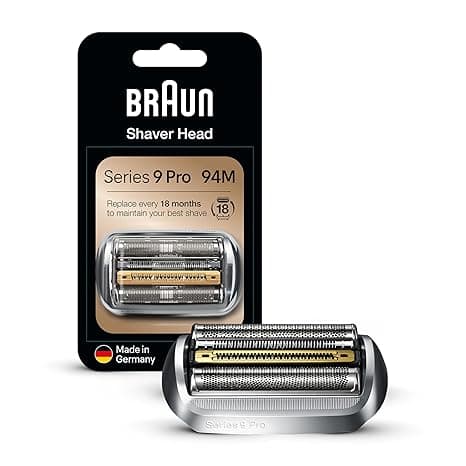
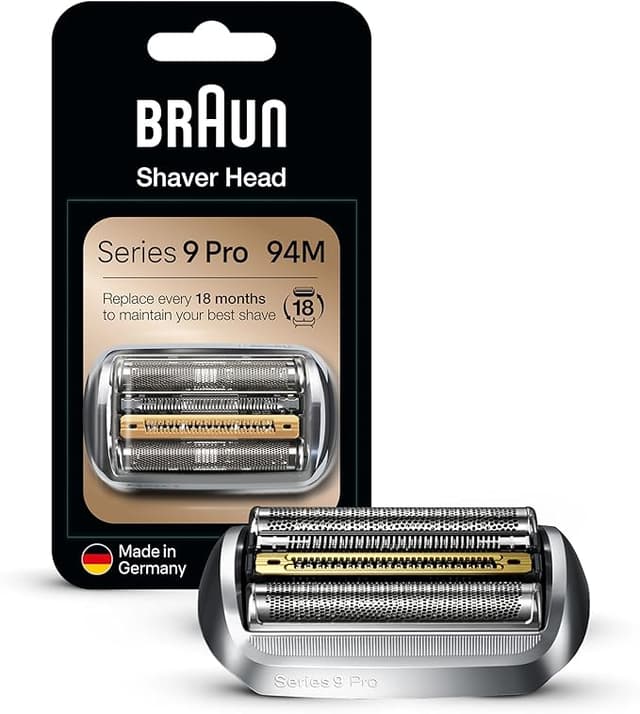
The bigger honest concern is longevity, and this is the one you can't fully know on day one. A genuine Braun foil is rated for roughly 18 months of regular use before Braun tells you to swap it. I've had this compatible head running daily for a little over four months now and it's holding steady — no new pulling, no visible foil damage. But I genuinely don't know yet if it'll go the full 18 months or tap out at, say, twelve. If it only lasts two-thirds as long, the math gets closer: two compatible heads at $17 over the same span as one $38 OEM is still cheaper, but not dramatically. I'll update my own thinking when this one finally dies. Right now it shows no sign of it.
And the obvious one — the foil is thinner metal than Braun's. It feels a touch more delicate when you rinse and tap it out. I've gotten in the habit of being gentle knocking the stubble loose instead of banging it against the sink, which is probably good practice anyway.
Why a worn head is more than a comfort thing
It's easy to treat a dull shaver as just annoying, but a worn foil is what causes the razor burn and the ingrown hairs — the dull cutter pulls the hair, tugs the follicle, and irritates the skin on the way. Running a dead head for months isn't saving money, it's trading a $17 part for a week of looking like you have a rash. Swapping at the first sign of pulling is the actual fix, whichever head you buy.
So who should buy which
If you're someone with sensitive skin who shaves a sharp, awkward jawline every single day and notices the difference in a half-millimeter of foil flex — buy the genuine Braun cassette. The extra twenty bucks buys you that last bit of contour-following and the proven 18-month lifespan, and you'll feel it.
For everyone else — and that's most of us — the compatible 92S head fixed the exact problem I had, fit my mount cleanly, and did it for $17 instead of $38. It smells a little at first, the box is junk, and the jury's still out on whether it goes the full distance. But four months in, my neck stopped looking like a battlefield and I've got twenty-one dollars I didn't spend on a part that does the same job. I'd buy it again — and when this one finally wears out, I will.