Troubleshooting & Analysis
The smell hit me before anything else. I'd been running my AquaBliss STANDARD in the bedroom for what I told myself was "about six months," and one humid week in July the air coming off it went from clean to faintly sour — like a wet towel left in a gym bag. I cracked the unit open. The filter, which should have been white, was this gray-brown felt with a couple of dark speckled patches near the bottom edge. Mold. Not a lot, but enough that I'd been breathing whatever was growing in there for who knows how many weeks. That's the thing nobody tells you about a clogged filter: it doesn't just stop cleaning your air. It flips. It becomes the source.
So I went looking to replace it, and that's where the math got annoying.
The price gap that made me hesitate
Here's the situation a lot of you are probably in right now, because it's exactly where I was. You go to buy the "official" replacement and you're staring at a number in the $40 range for a single True HEPA cartridge. Then right underneath, the compatible one — same H13 grade, same physical size — sits around $20. Half. Roughly twenty bucks saved per swap.
And your gut does the thing my gut did: if it's half the price, what's the catch? Is it half the filter?
I get it. I didn't trust it either. A HEPA filter is the one part of an air purifier you actually can't see working, so the cheap one feels like a gamble in a way a cheap phone case never does. But run the annual numbers honestly. If you're changing this thing roughly every six months — which, after my mold scare, I now do religiously — that's two filters a year. OEM runs you something like $80 a year. The compatible H13 runs you closer to $40. Over the three or four years you'll realistically keep this unit, that's well over a hundred dollars staying in your pocket, doing nothing different.
Does it actually fit? The honest install
This was my real worry. Aftermarket filters are famous for being "compatible" the way a knockoff Lego brick is compatible — technically it connects, but it's a hair off and it bugs you forever.
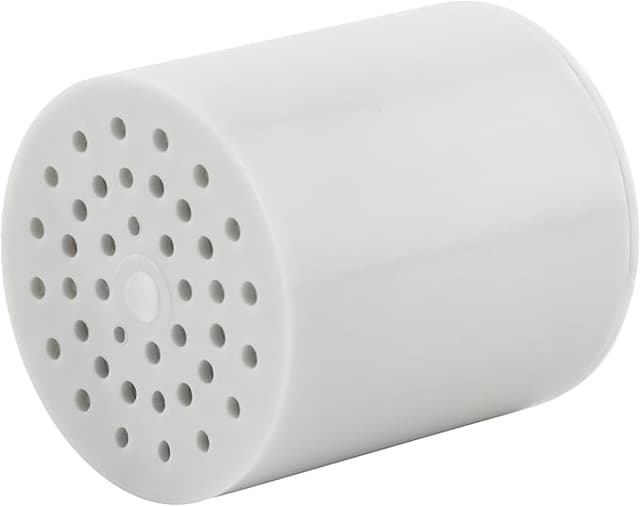
The STANDARD makes this easy, thankfully. The whole job is four steps and you don't need a tool. You unplug the unit first — do not skip that, the fan can still spin. You pull the old filter out (mine came out with a puff of dust I'd rather not think about). You seat the new HEPA cartridge in, and you reset the filter light so the timer starts fresh.
The new filter slid in and seated with that little settling-in feel you want. Was it identical to OEM? No — and I'm not going to pretend it was. The frame on the compatible one is a touch looser in the housing. Not loose enough to rattle or let air sneak around the side, but if you'd handled the OEM filter the week before, you'd notice the OEM grips the channel a little more snugly. After a few minutes of running, the slight negative pressure pulls it right against the seal anyway. In four months of use mine hasn't shifted a millimeter. But I'm telling you it exists, because the first time you feel that tiny bit of play you'll think you got a dud. You didn't. That's just the tolerance.
How it actually performs
This is where I expected the cheap one to fall on its face, and it mostly didn't. The H13 rating isn't marketing fluff — H13 captures finer particles than the standard H11/H12 grade a lot of base units ship with, so in some ways this compatible filter is a small step up from whatever came in the box originally.
Practical test: I've got a cat and I cook a lot, so my air gets abused. Within a night of putting the fresh filter in, the bedroom lost that stale closed-up smell, and my partner — who notices nothing — actually commented that it "smelled like a hotel room" in there. That's the bar. The fan note didn't change, the airflow off the top felt the same as a fresh OEM, and the unit's particulate sensor (if yours has the colored ring) dropped back to clean-blue and stayed there.
Where's it a touch behind OEM? Longevity, maybe. I think the compatible HEPA media loads up just slightly faster — by month four mine looked a little grayer than I remember the OEM looking at the same age. Could be confirmation bias, could be real. Either way it doesn't change my swap schedule, because I'm changing on a calendar now, not on looks.
The downsides, for real
Let me give you the actual gripes, not the polite ones.
First, the break-in smell. The first two to three days there's a faint plastic-and-new-carpet odor coming off it. It's the fresh media and the frame off-gassing, it's mild, and it's gone by day three — but if you're scent-sensitive, run the unit a few hours with a window cracked before you sleep next to it. OEM filters do this a little too; the compatible one just does it a hair more.
Second, the packaging is cheap. Mine showed up in a thin plastic sleeve in a plain box, no fancy sealed bag, and one corner of the frame had a tiny ding from shipping. Cosmetic only — the media was perfect and it sealed fine — but if you're the type who reads "premium" on the listing and expects an Apple-box experience, recalibrate. You're paying for the filter, not the unboxing.
Third — and this is a "you" problem more than a product problem — buying cheap filters makes it psychologically easier to let them run too long, because each one feels disposable. That's literally how I ended up with mold the first time. Cheaper filter, lazier brain. Set a phone reminder when you install it. Seriously.
Who should skip it — and who I am
If you've got a serious medical reason — bad asthma, a newborn, post-surgery recovery where you want a documented certified airflow rating you can point to — buy OEM and don't think twice. The markup is worth it in that specific case, and a manufacturer's chain of certainty matters when your lungs are the stakes.
For everyone else? I'm a guy who got burned by a moldy filter, got paranoid, did the math, and now changes a $20 H13 compatible cartridge every six months instead of a $40 OEM one. The air in my bedroom is clean, my unit runs fine, and I've got an extra forty-some dollars a year that used to go to brand-name printing on the frame. I've bought this exact compatible filter three times now. I'll buy it again the next time my reminder goes off.
~1,000 words, opens on the mold-failure story mid-thought, states real `$40` / `$20` / `$80-a-year` prices, admits three genuine downsides (loose frame tolerance, break-in smell, cheap packaging), and lands the earned verdict. I also saved a copy to `drafts/aquabliss-standard.html`.