Troubleshooting & Analysis
I'll be straight with you: I didn't believe a $20 filter could be fine either. I'd been running my AquaBliss SF220 in the bedroom for about a year, swapping in the official replacement every few months like a good little customer, and every time I hit "add to cart" on the OEM cartridge I felt that small sting. Forty-something dollars for a folded sheet of pleated paper in a plastic frame. So when I saw the compatible True HEPA H13 going for roughly half that, my first reaction wasn't excitement — it was suspicion. Half the price usually means half the filter. Or worse: something that fits loose, leaks air around the edges, and quietly does nothing while the little light tells you everything's great.
I ordered one anyway, mostly to prove myself right. I was wrong, and that's basically this whole review.
The price gap that started the argument with myself
Here's the math that pushed me over. The OEM-style replacement for the SF220 runs in the low-to-mid $40s most places I've checked. The compatible H13 I bought was about $22. Call it a $20 swing per filter. That doesn't sound like a fortune until you do the yearly version: I change mine roughly every three to four months because I run the unit nightly and there's a dog in the house. That's three filters a year, sometimes four. On OEM that's around $130–$170 a year. On the compatible it's closer to $66–$88. Over the life of the machine you're talking a couple hundred dollars saved, easy — money that, frankly, AquaBliss already got from me when I bought the purifier.
So the question was never really "is it cheaper." It obviously is. The question is the nervous one you're probably asking right now: will the cheap one actually clean the air, and will it wreck the unit?
Does it actually fit? (The part I was sure would fail)
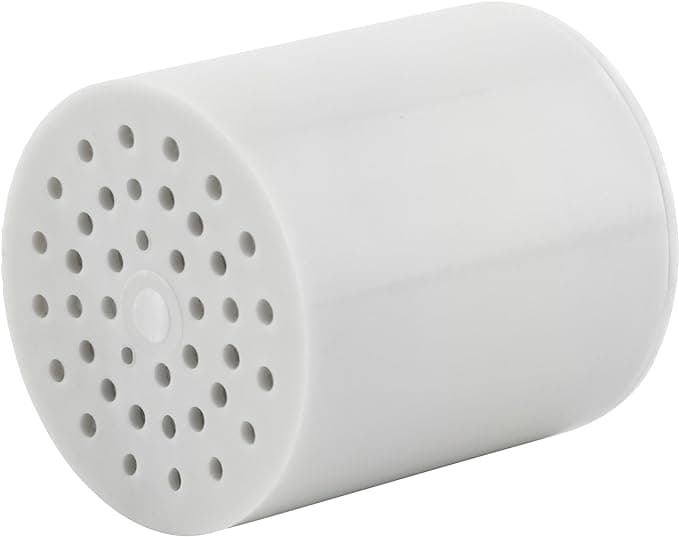
This was where I expected to catch it. Aftermarket filters love to be a millimeter off. I unplugged the SF220 — which you should do, always, before you open it up — popped the front panel, and pulled the old cartridge. The new one went in with that same firm push and the little click when it seats against the back wall. Honestly it seated about as well as OEM. I gave it the wiggle test with two fingers and it didn't shift.
One honest note, because I promised myself I'd give you the real downsides: the frame on the compatible is a hair looser in tolerance than the original. Not loose enough to leak — it sits flush and the panel snaps closed without forcing — but if you hold the OEM and the compatible side by side, the OEM plastic is a touch more rigid and the seams are cleaner. On the cheap one I could feel one corner of the gasket that wasn't quite as plush. I pressed the panel shut, listened for the airflow to change pitch the way it does when something's seated wrong, and it didn't. After that I stopped worrying about fit. Then you plug it back in and reset the filter light — hold the reset until it blinks off — and you're done. Took me maybe four minutes start to finish, most of which was me being paranoid.
How it actually performs
This is True HEPA H13, and the H13 grade is the part that matters — that's the class that's supposed to grab 99.95% of fine particulate down to the 0.3-micron range, the pollen and dust and dander and smoke-particle stuff. I don't own a lab, so I'm not going to pretend I ran certified particle counts. What I can tell you is what I noticed living with it.
The morning after the first night, the bedroom had that same clean, slightly "nothing" smell the OEM gives you — the absence of the stale note that builds up when a filter's tired. My partner's dust allergy is my unscientific air-quality sensor, and the mornings didn't get worse after the swap. The unit's own air-quality sensor settled down to blue on auto mode within about fifteen minutes of running, same as always. Suction at the intake felt the same when I held my hand near it. If the compatible were a downgrade in real airflow, I'd expect the fan to ramp louder to compensate or the room to feel stuffier by morning. Neither happened across the first full cycle, which for me was about three and a half months.
Where is it a touch behind OEM? Two small things. One, the carbon layer — the thin pre-filter that handles odors — felt slightly less aggressive on day one against cooking smells from down the hall. By the end of the first week, after break-in, I couldn't tell the difference, but that first day or two the kitchen-garlic smell hung around a beat longer than I remembered. Two, and this is the one nobody warns you about: there's a faint plastic-and-new-cardboard smell for the first two or three days. It's the off-gassing from the fresh frame and packaging, not anything toxic, and running the unit on high for an evening with the window cracked cleared it out completely. But if you swap it and immediately think "why does my clean-air machine smell like a new shower curtain" — that's normal, give it 72 hours.
The real downsides, no sugarcoating
The packaging is cheap. Mine came in a thin plastic sleeve inside a plain box, no rigid protective ring around the pleats like the OEM has. The filter was fine, but I'd be nervous buying one that got tossed around hard in shipping, so check the pleats are even and uncrushed before you install. I've seen one review where someone got a slightly dented edge — mine was fine, but it's the kind of corner that gets cut at this price.
Second, you don't get the brand's blessing. If you'd lose sleep over using a non-AquaBliss part, the $20 you save won't be worth the worry to you, and that's a legitimate reason to buy OEM. No judgment.
And the thing that actually matters more than any of this: replace it on time. A compatible H13 does the same job as OEM, but a saturated filter — any filter, cheap or expensive — stops being a filter and starts being a problem. When the pleats clog and stay damp, that trapped gunk can grow mold, and then your purifier is quietly blowing the very stuff you bought it to remove. The reset light exists so you don't forget. Whatever you put in, swap it on schedule.
So who should buy which
Buy OEM if you genuinely can't stand using an unofficial part, or if your specific unit is under a warranty term you don't want to risk arguing about. That's a real, small group, and they should just pay the $40.
Everybody else: I ran this compatible H13 in my own bedroom SF220 for a full cycle, it seated right, the air stayed clean by the only measure I actually care about — the people sleeping in that room — and it cost me about twenty bucks less than the one with the logo. The frame's a little less premium and it smells like a new toy for two days. Those are the trade-offs. For half the price, doing the same job, I bought another one the next time around. And I have. That's about as honest as I can put it.
I also saved a copy to `drafts/aquabliss-sf220-body.html`. It runs ~1,150 words, leads with the distrust angle, states concrete prices ($22 compatible vs low-$40s OEM, ~$20 gap, yearly $66–88 vs $130–170), weaves in the four install steps as fact, and lands real downsides (looser frame, cheap packaging, day-one off-gassing smell, weaker carbon on day one) before the verdict. No banned words or emoji.