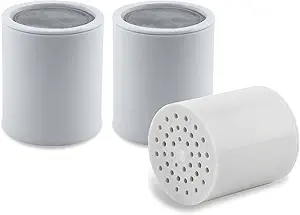
Troubleshooting & Analysis
The smell hit me before the warning light did. I walked into the bedroom one evening last fall and the air had this faint, swampy edge to it — not strong, just wrong, like a damp basement somebody tried to cover up with nothing. My AquaBliss SF220 was humming along on its little perch by the window like everything was fine. It was not fine. I'd blown past the replacement interval by a good two months, maybe more, because the filter light had been doing that annoying thing where you reset it and forget it. When I finally popped the housing open, the HEPA pleats were gray-brown and there was a soft, fuzzy bloom in one corner. Mold. Actual mold, growing on the one thing whose entire job is to keep that junk out of my lungs.
That's the part nobody tells you when you buy an air purifier. A clean filter cleans your air. A dead one does the opposite — it sits there saturated, and instead of trapping particles it starts farming them, then quietly puffs them back into the room every time the fan spins up. I'd basically been running a pollution diffuser for weeks. So this review comes from a slightly embarrassed place: I learned the hard way that the filter is the whole machine, and the only real question after that is whether you keep bleeding money to AquaBliss every few months or find something honest and cheaper.
The price math that made me look elsewhere
Here's what set me off. The official replacement HEPA for the SF220 runs around $40 when you buy it straight from the brand, sometimes more if you don't catch a sale. On a unit like this you're swapping the HEPA roughly every six months if you run it daily — and I run mine basically every night plus most of the workday. So call it two filters a year, $80-ish, just to keep one bedroom purifier honest. Over the three or four years these machines actually last, that's $240 to $320 in consumables on a device that wasn't expensive to begin with.
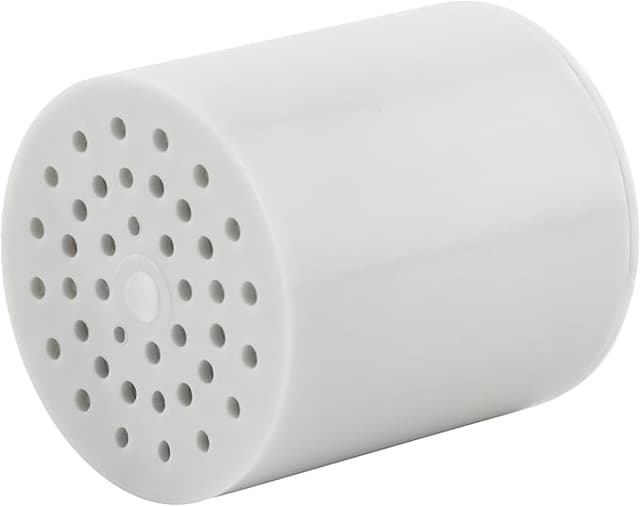
The compatible True HEPA H13 I switched to came in right around $20. Same physical filter, same H13 grade — which, if you don't know, is a notch tighter than the standard HEPA spec a lot of OEMs quote, pulling down into the 0.1-micron range where the fine nasty stuff lives. Half the price. That's a $20 gap per filter, $40 a year back in my pocket, and over the life of the machine it's the difference between "ugh, again?" and "fine, whatever, order another."
Does it actually fit, or is that the catch?
This was my worry too. Compatible filters love to be "compatible" right up until you're standing there with the housing open and a part that's a millimeter too wide. So I'll be specific about the swap, because it matters. You unplug the unit first — not optional, the fan can creep and it's a dumb way to nick a finger. Pop the front cover, pull the old filter straight out (mine came out with a little puff of dust, which tells you everything about why you're doing this in the first place). The new HEPA drops in the same orientation, and on the SF220 you'll feel it seat — there's a soft, definite stop when it's home, not a wobble. Then you hold the reset until the filter light clears.
On fit: the compatible one seated right, but I won't pretend it was identical to factory. The frame is a hair looser than the OEM part. Where the original sits in there like it was poured into the slot, this one had maybe a half-millimeter of give — enough that I gave it a second push to make sure it was flush against the gasket. Once it was in, no rattle, no whistle, no air sneaking around the edge that I could feel with my hand near the seam. But that first-fit looseness is real, and I'd be lying if I skipped it.
How it actually performs
Four months in now, and honestly? I can't tell the difference in the air. My test isn't fancy — I cook a lot, and a kitchen-adjacent bedroom means cooking smells and the occasional smoke wisp drift in. The SF220 with this filter clears that the same way it did on the factory part: fan ramps up on auto when something stirs, room is neutral again in fifteen, twenty minutes. Dust on the windowsill, which used to be my low-key shame, builds up noticeably slower than during my mold-farming era. The H13 media grabs fine particulate just fine. No complaints on the actual filtering, which is the only thing that truly counts.
Where it's a touch behind: the carbon layer. The OEM filter has a slightly more aggressive activated-carbon pre-layer for odors, and I think the compatible one is a hair thinner there. With a heavy cooking smell — like, I seared something and forgot the vent — the room takes a couple extra minutes to fully neutralize versus what I remember from the factory part. It gets there. It's just not quite as instant on smells. On particulate, dead even. On odor, OEM has a slim edge.
The downsides, said plainly
Two real ones, and I'm not going to soft-pedal them. First, the break-in smell. Out of the bag, the first two or three days, there's a faint new-plastic scent when the fan runs — that fresh-out-of-the-package thing where the media and frame are off-gassing a little. It's mild, it aired out fully by day three or four for me, and it never came back. But if you're sensitive to smells, run the unit a few hours with the window cracked before you trust it overnight.
Second, the packaging is cheap. The OEM filter shows up in a proper sealed box; this came in a thin plastic bag with a sticker slapped on. Cosmetically unimpressive, and on one of mine the cardboard frame had a slightly bent corner from shipping — didn't affect the seat, but it doesn't inspire confidence when you open it. And a smaller third gripe: the printed instructions are barely there, basically a diagram. If you've never cracked your SF220 open before, you'll want that unplug-pull-insert-reset rhythm in your head first, because the insert won't hold your hand.
So who should skip it?
If you've got someone in the house with a real respiratory condition — bad asthma, a recent surgery, anyone immune-compromised — and a few dollars genuinely don't matter to you, buy the OEM and never think about it. The factory carbon layer's slight odor edge and the guaranteed perfect frame fit are worth paying for when the stakes are health and the budget isn't a constraint. Same if you're the type who'll be bothered by a bag instead of a box. No shame in that.
For everyone else — which is me — the compatible H13 does the same actual job, on the same schedule, for twenty bucks instead of forty. After my mold scare, the thing I actually care about is that I'll replace it on time, and at half the price I genuinely will, because re-ordering doesn't sting. A filter you'll swap on schedule beats a fancier one you stretch to nine months because it hurt to buy. I've reordered this one twice now. Faint break-in smell, sad little bag, looser frame and all — for the SF220, it's the one I keep buying.