Troubleshooting & Analysis
The click. That's the thing I didn't expect. When you seat a new HEPA panel into an AquaBliss SF220, there's a soft plastic snap as the door catches — and the very first compatible filter I tried didn't make it. It slid in, the door sort of closed, but it never gave me that little click. I sat there for a second going, is that it? Is that how the cheap ones are? Turns out no. That first one was just a hair undersized. The one I run now seats with the exact same reassuring snap the OEM had, and I've been listening for it every two months for the better part of a year.
So let me back up, because that's really the whole question you're sitting with right now. You own an SF220. The filter light just came on, or it's about to. You looked up the genuine replacement, felt your stomach drop a little at the price, and now there's a compatible H13 panel sitting in another browser tab for roughly half. And you're nervous it'll either not fit or quietly let your bedroom air go to garbage. I was exactly there. Here's what I actually found.
The price math, because that's why you're here
AquaBliss leans on the usual line — why pay high OEM prices when you can get True HEPA H13 for half the cost. Normally I roll my eyes at that copy, but in this case the gap is real and it adds up fast. The genuine panel runs in the $40 range. The compatible True HEPA H13 I've been buying lands around $20. That's a $20 swing per swap, and on the SF220 you're swapping roughly every two to three months if you run it like I do — nightly, in a room with a dog who sheds like it's his job.
Do that arithmetic over a year. Four-ish replacements. On OEM you're somewhere near $160 a year just feeding this thing. On the compatible, you're closer to $80. That's not a rounding error. That's a tank of gas and a couple of lunches, every single year, for a panel that does — and I'll get into this — basically the same job.
Does it actually fit, or am I going to fight it?
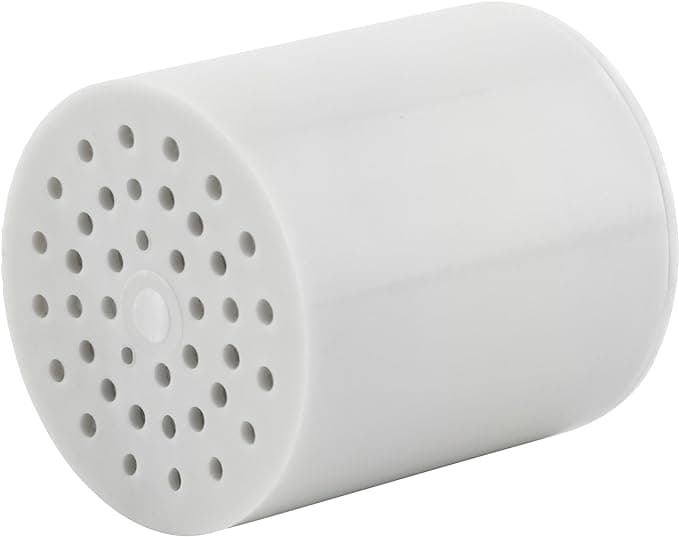
Install on the SF220 is genuinely brainless, and the compatible panel doesn't change that. Unplug the unit first — I know, I know, the manual says it and you want to skip it, but the fan can still spin you a finger if it's awake, so just pull the plug. Pop the back, lift the old filter straight out (it'll be gray and sad and probably smell faintly of whatever your house smells like), and drop the new one in. It only goes one way. Then plug back in and hold the reset until the filter light stops nagging you.
The whole thing is a ninety-second job. Where the compatible filters vary is that seating tolerance I mentioned. Most I've handled fit the cradle dead-on. One brand's frame was a touch loose — it sat fine but rattled a little under high fan, and that rattle drove me up the wall at 2 a.m. So my honest advice: when you first install it, run the unit up to its top speed for a minute and just listen. If it's silent and clicked, you're golden. If it buzzes, the frame's slightly off and I'd send it back rather than live with it.
How it actually performs
This is where I expected the compatible to fall on its face, and it mostly didn't. True HEPA H13 is a real spec — it's the grade that captures the fine stuff, the 0.1-micron range, not the loose "HEPA-type" weasel wording you see on the bargain panels. The one I run pulls down dust and dander about as well as the genuine did. My tell is dumb but reliable: the top of my dresser, which used to need wiping every few days, stays clean about as long now as it did on OEM. When my allergies flare in spring, the unit on high still clears that stuffy-room feeling in twenty, thirty minutes.
Where it's a touch behind — and it is, I'm not going to pretend — is the carbon layer for smells. The OEM panel knocked out kitchen and pet odor a little more aggressively. The compatible handles it, but if I burn something on the stove, the genuine filter cleared the air maybe ten minutes faster. For pure particulate, I can't tell them apart. For odor, the OEM has a slight edge. Whether that's worth twenty bucks a pop is a you call, but for me, in a bedroom, it isn't.
The downsides, for real
Two things, and I'd want a friend to tell me both before I bought.
First, the break-in smell. The first compatible panel I opened had a faint plastic-and-cardboard odor for the first two or three days. Not chemical, not headache-inducing, but noticeable if you're the type who sniffs things. It fully aired out by day three and never came back. The OEM had a whisper of this too, honestly, just less. If you're sensitive, run the unit on high for an hour with a window cracked before you go to bed on it.
Second, the packaging is cheap and the quality control is a little streakier batch to batch. The OEM box feels premium and every panel is identical. The compatible ships in a thin plastic sleeve, sometimes with a slightly crushed corner, and as I said, one in maybe five frames has been a touch off-spec. That's the real cost of the lower price — you occasionally have to do a thirty-second sanity check and, rarely, a return. If you hate dealing with returns at all, that friction is worth knowing about.
Why a dead filter is the actual danger
Here's the part people skip, and it's the most important thing in this whole review. The mistake isn't buying compatible. The mistake is running any filter — OEM or aftermarket — long past dead because you're trying to save money. A saturated HEPA panel doesn't just stop cleaning. It becomes the problem. All that trapped dust and pet dander and, in a humid room, mold can start to colonize the loaded media, and then your purifier is quietly blowing that back into the air you sleep in. Warning's right there on the box for a reason.
Which, funny enough, is the strongest argument for the compatible. When the replacement is $20 instead of $40, you actually swap it on schedule instead of stretching a tired panel two extra months to dodge the cost. The cheaper filter you change on time beats the premium filter you ride into the ground. That's not marketing. That's just how I ended up keeping my air honest.
So who should buy what
If you've got a smoker in the house, a serious kitchen-odor situation, or you simply will not tolerate a faint plastic smell for a couple of nights, buy the OEM. You're paying for that last bit of carbon performance and the guaranteed-perfect frame, and that's a legitimate reason.
For everyone else — the bedroom-unit, dust-and-dander, why-is-this-so-expensive crowd, which is most of us — I grab the compatible H13. I have, repeatedly. It clicks in the same, clears my room the same, and it costs me half. The first one fooled me with that missing click, sure. But the right one's been sitting in my SF220 for months, doing the quiet job I bought it for, and I'd buy it again tomorrow.