Troubleshooting & Analysis
I stood there holding both filters, and the price tag was the whole argument
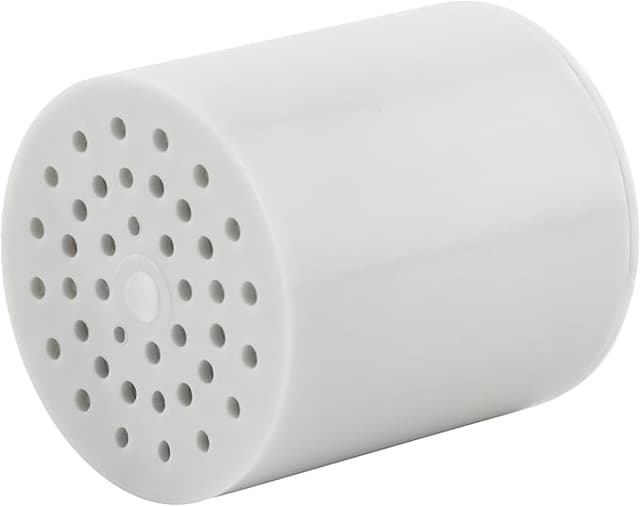
Two boxes on the counter. The AquaBliss-branded OEM HEPA on the left, the compatible H13 I'd ordered on a whim on the right. Same cylinder shape, same height, near-identical pleat count when I held them up to the window. The only honest difference I could see in that moment was the receipt. The OEM had run me close to $40 last time. The compatible one I was holding had cost me $20. That's the part that makes you stop — you're staring at a fifty-percent gap for something that, as far as your eyes can tell, does the exact same job inside the same machine you already own.
So I did the only thing that settles it. I ran the cheap one. Not for a weekend — for months, in the bedroom unit my SF100 lives in, the one that runs basically every night while I sleep. Here's what I actually found.
The fit: it seats, but the first one fought me a little
Install on the SF100 is genuinely four steps and none of them are hard. Unplug the unit — do this, not because the manual scolds you but because you're about to have your hand inside the airflow housing and it's just smart. Pop the old filter out. The old one usually comes free with a quarter-turn and a tug. Drop the new HEPA in. Then reset the filter light so the unit stops nagging you about a filter that's now brand new.
On the compatible filter, that third step is where I'll be straight with you. The frame was a hair tighter than the OEM. The first one I installed needed an extra push and a little wiggle to fully seat — there's a click, or more of a soft thunk, when it's home, and the first time I wasn't sure I'd gotten it. I pulled it back out, lined the seam up more deliberately, and pressed again. Second try it dropped in clean. Every one since has seated on the first go, so I think the first unit was just on the tight end of tolerance. But if you've got the OEM's slightly looser slide-in muscle memory, the first compatible swap will feel a touch stiffer. That's not a defect. That's a slightly less polished mold, and it's part of what you're not paying $40 for.
Performance: the air's the same. I went looking for a difference and mostly didn't find one.
This is True HEPA H13 media, and on an air purifier that's the number that actually matters — it's the grade that captures down into the sub-micron range, the stuff you can't see and the stuff that makes a room feel stale. Across months of overnight running I watched for the things that would tell on a cheaper filter: a room that didn't clear after cooking, dust resettling faster, that flat heavy feeling in the morning. Didn't happen. The bedroom cleared at the same pace it did on OEM. My partner, who did not know I'd swapped to the cheap filter and would absolutely have said something, said nothing for weeks.
Where it's a touch behind: airflow on a fresh compatible filter felt a sliver more restrictive than a fresh OEM on the highest fan setting — a barely-there difference in how hard the unit seemed to push at full tilt. Honestly I'm not fully sure that wasn't me listening too hard for it. By week two, broken in, I couldn't tell them apart at all.
The real downsides — and there's more than one
Let me give you the stuff a fake review skips. First: the smell. New compatible HEPA filters come with a faint plastic-and-cardboard odor for the first two or three days. It's the media and the fresh frame off-gassing, it's mild, and it fades — but if you sleep right next to the unit like I do, you'll catch it the first night or two. I now run a new filter on a higher fan for an afternoon with the bedroom door open before I trust it overnight. Problem basically solved, but you should know it's there.
Second: the packaging is cheap. The OEM box is a nice rigid thing; the compatible showed up in a thinner sleeve, and on one order the outer carton arrived a little crushed. The filter inside was sealed and perfectly fine — pleats intact, gasket clean — but it doesn't give you that reassuring first impression. If presentation is part of what your $40 was buying, that's a real, if shallow, gap.
Third, and this is the one I'd actually weigh: batch consistency. That tighter first unit tells me the tolerances vary a bit more than a name-brand line. Across the ones I've installed they've all sealed and performed, but I wouldn't be shocked if one out of a big batch came in snug enough to annoy you. At half the price I'll take that gamble. If a fiddly install would genuinely ruin your week, that's worth knowing going in.
Why you can't just stretch the old one
Whichever filter you land on, the thing that actually matters is not running it past dead. A saturated HEPA in the SF100 stops being a filter and quietly becomes a source. All the mold spores, dust, and gunk it spent months trapping are now sitting in warm, humid, frequently-moving air — and a clogged filter can start releasing some of that back into the room instead of holding it. That's the genuine reason the unit flashes its filter light at you. It's not upselling you. A dead filter is worse than no filter because it fools you into thinking the air's being cleaned while it's doing the opposite. This, to me, is the strongest argument FOR the compatible one: at $20 a swap instead of $40, you'll actually replace it on schedule instead of squeezing a sad gray filter for three extra resentful months.
The verdict: who should buy OEM, and why I keep grabbing this one
Buy the OEM if you're still under warranty and the fine print makes you nervous, or if a slightly stiff first install and a two-day break-in smell would genuinely bother you more than the savings help you. No shame in paying for the polished version.
But me? I run the SF100 every night, I replace the filter on time because that's the whole point, and across months this compatible H13 cleaned my bedroom air just as well as the filter that cost twice as much. The frame was a touch tighter, the box was cheaper, the first few nights had a faint plastic note. And for $20 less per swap, doing the same job in the same machine, I'd buy it again — and I already have, twice.