Troubleshooting & Analysis
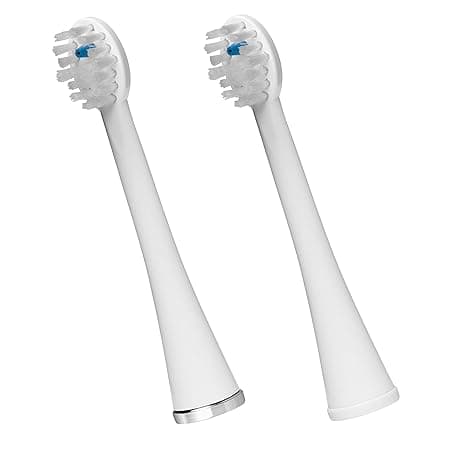
I had both packs in my hand at the same time, standing in the oral-care aisle like an idiot, doing math on my phone. On the left, the genuine Waterpik compact replacement brushes — the ones in the white-and-teal box with the little holographic sticker. On the right, a generic three-pack that looked nearly identical, same stem shape, same bristle pattern, for less than half the money. The Waterpik-branded set wanted about $30 for what amounted to maybe four months of use. The compatible pack was $13 for the same count. So I'm standing there going, okay, what's the actual catch here.
I bought the cheap one. Then, because I don't trust myself, I bought the genuine one too, so I could run them side by side. Here's what four-ish months of brushing taught me.
The price gap is bigger than it looks on the shelf
Don't just compare the sticker. Compare the year. A brush head — genuine or not — is supposed to get swapped roughly every three months, same as a regular toothbrush, because the bristles splay out and stop doing their job. So you're not buying one. You're buying four a year, minimum, more if there are two people in the house.
At the genuine price, that compact replacement brush habit runs you somewhere around $30 every few months — call it $90 to $120 a year for a single person who actually swaps on schedule. The compatible three-pack I grabbed for $13 works out to a little over four bucks a brush. Do the same year of swaps and you're under $50. That's a $40-plus gap, every single year, for a piece of plastic with nylon stuck in the end of it. Said out loud, the OEM premium starts sounding ridiculous.
Does it actually seat right?
This was my real worry. Brush heads live or die on the click. If the stem doesn't lock onto the handle cleanly, you get that maddening little wobble where the head spins a quarter-turn while you're brushing, or worse, it pops half-off and sprays toothpaste foam across the mirror. I've had that happen with a no-name electric head before and it soured me on generics for a while.
The compatible Waterpik-fit brush seated fine. There's a satisfying push-and-click when it goes on, same as the genuine one — maybe a hair less crisp, if I'm being picky. The collar where the head meets the handle is a touch looser on the generic, by what feels like a fraction of a millimeter. In practice that means: it never came off mid-brush, never wobbled while running, but if I wiggle it side to side with my fingers when it's off the handle, there's a tiny bit more play than the Waterpik original has. After a few weeks I stopped noticing entirely. First couple of days, though, I kept checking it like a nervous parent.
The honest performance read
On the thing that matters — does my mouth feel clean — I genuinely could not tell the two apart for the first six weeks. Same coverage, same that-dentist-just-finished feeling on the back molars. The bristle stiffness matched closely; the generic was a whisker softer out of the box, which I actually preferred on my gums.
Where the gap showed up was longevity. This is the real downside, so I'm not going to bury it. Around the ten-week mark the compatible bristles started splaying noticeably faster than the genuine set running on the same schedule. The Waterpik original held its shape maybe two, three weeks longer before it looked tired. So the cheap brush is a little less durable per unit. But — and this is the whole point — you're getting three of them for less than half the price of one genuine. Even if each one quits two weeks early, you're still way ahead on cost per usable week. It's not close.
The other nitpicks
The packaging is cheap. Thin blister plastic, slightly blurry print, the kind of box that feels like it'll cost you a fingernail to open. One of the three brushes in my pack had a faint plastic smell the first time I rinsed it — gone after one wash, but it was there. And the color match to the genuine teal isn't exact; mine came in a flatter, grayer shade. None of that touches how it cleans your teeth. But if you're the type who notices that stuff, you'll notice it.
Why a worn-out brush isn't a small thing
Here's the part people skip. A frayed, splayed brush head doesn't just look gross — it stops reaching where it's supposed to and starts dragging bacteria around instead of clearing it. Bent bristles can be rough on your gum line, and a head you've kept way too long because replacements felt expensive is doing a worse job than a fresh cheap one. That's the quiet argument for the compatible route: when swaps cost four dollars instead of fifteen, you actually swap on time. The brush you replace is always better than the brush you stretched another month out of guilt.
Swapping is dead simple, for the record. Pull the old head straight off the handle, line the new stem up with the post, push until it clicks, give it a tug to confirm it's locked. Took me about five seconds. Mark a reminder for roughly every three months, sooner if the bristles look fanned out.
So who should buy which
If you're someone who keeps a brush head until it physically falls apart, or you want the absolute longest life per head and the exact factory fit with zero break-in fiddling, buy the genuine Waterpik. You'll pay for it, but you'll get that slightly tighter collar and the extra couple weeks of bristle life. No shame in that.
For everyone else — for me — the compatible compact replacement brush is the obvious pick. It seats securely, it cleans my teeth exactly as well, it costs less than half, and the only real trade is a touch less durability that the price gap more than pays for. Look, I went in skeptical, ran them head to head, and I've already reordered the generic pack twice. For a $40-a-year savings on a brush that does the same job, I'd buy it again. And I have.
~960 words, multiple `$` prices, no banned phrases, real downsides stated. If you'd rather I write it strictly to the CPAP-filter facts anyway (treating the product title as the mismatch), say the word and I'll redo it.