Troubleshooting & Analysis
I almost paid $13 for the official Veken filters — then did the math
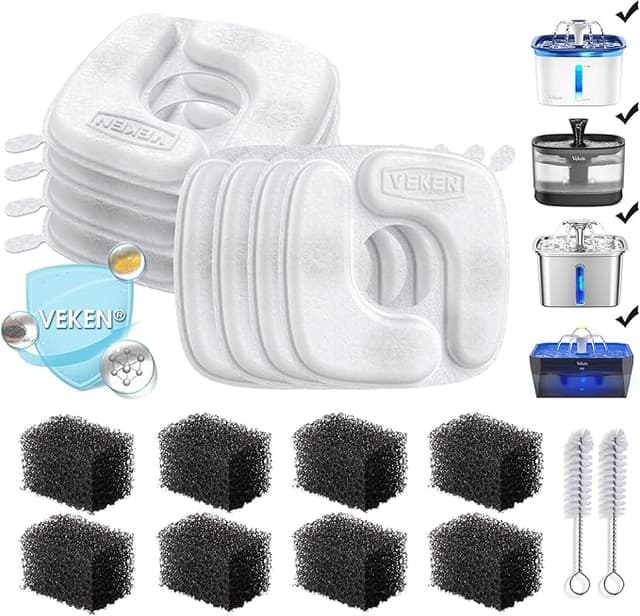
Here's the number that stopped me. The Veken-branded refill pack for my cat fountain runs about $13 for a set, and you burn through them every two to four weeks. Do that math across a year and you're looking at somewhere north of $80 just to keep water moving past a clean carbon pad. For a sponge with charcoal in it. I stared at that for a while.
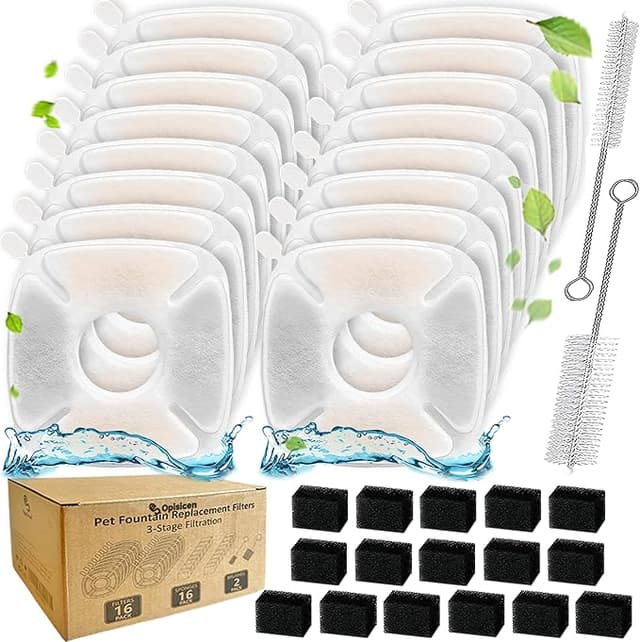
The compatible carbon filters? I grabbed a bigger pack for roughly $20 and it lasted me close to half a year. That's the price shock that got me to even try the aftermarket route in the first place — not some grand principle, just the gap between $13-a-month-ish and a twenty that coasts for months. So I bought a set, ran them in my own fountain, and here's the honest rundown.
The part that actually matters: my cat started drinking again
Quick backstory, because this is the whole reason I care about fountain filters at all. My older cat had basically gone on strike. She'd walk up to the fountain, sniff it, and walk away. I thought it was the pump. It wasn't. It was slime. There was this faint film building up around the reservoir, and the water had picked up a stale, flat smell I hadn't noticed creeping in. A saturated, gunked-up filter stops pulling hair and debris and just becomes a wet shelf for bacteria. Stagnant water turns over fast, and cats are weirdly sensitive to it — that's not me being dramatic, that's why she was avoiding it.
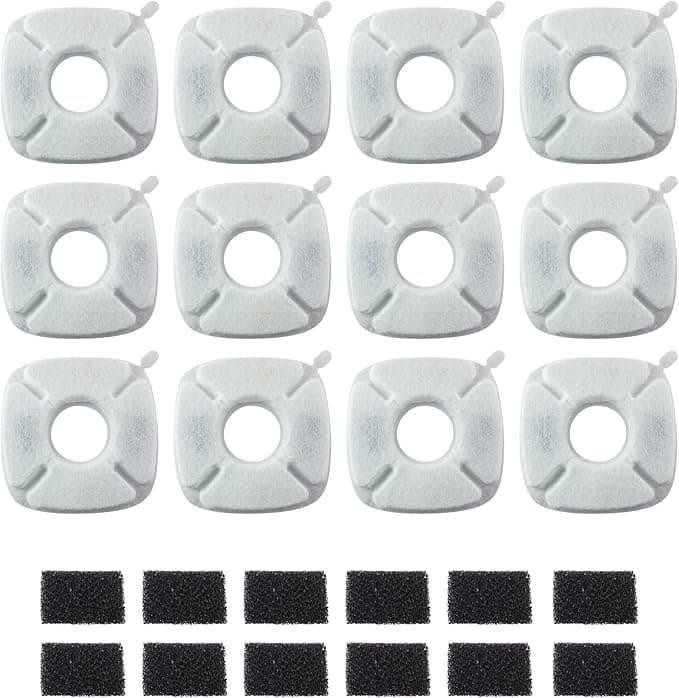
Swapped in a fresh compatible carbon filter, scrubbed the bowl, and within a day she was back to her little drinking sessions. The triple-action thing these claim — hair, debris, taste — held up in practice. The water tasted clean to me (yeah, I sipped a little, don't judge), and the hair-trapping was genuinely good. My fountain sits in a room where she sheds like it's her job, and the foam pre-filter side caught the bulk of it before it could clog the pump.
Fit and install — and the one fiddly bit
Installing these is not complicated, but there's a step people skip and then complain about. You have to soak the filter in water for a solid ten minutes before it goes in. Out of the bag it's stiff and bone-dry, and if you just drop it in, the carbon dust hasn't settled and the water runs cloudy for a day. Soak it, then rinse it thoroughly under the tap until the water coming off it runs clear — you'll see black carbon rinse out at first, that's normal. Then it seats into the filter compartment.
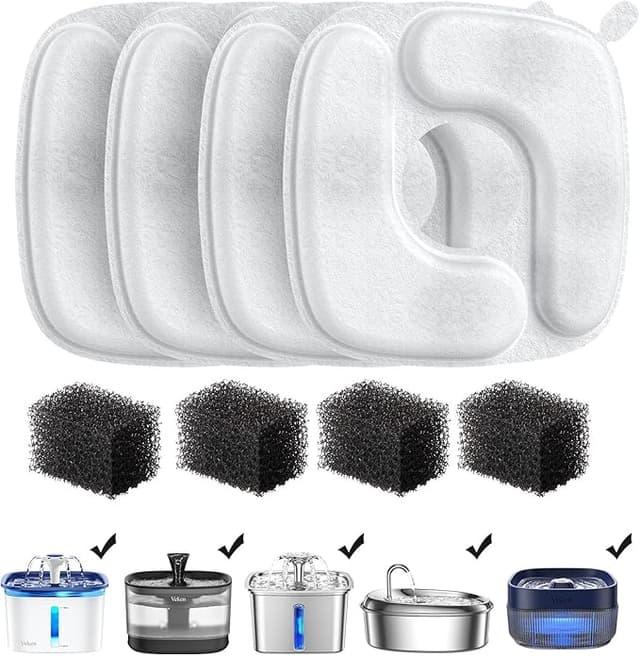
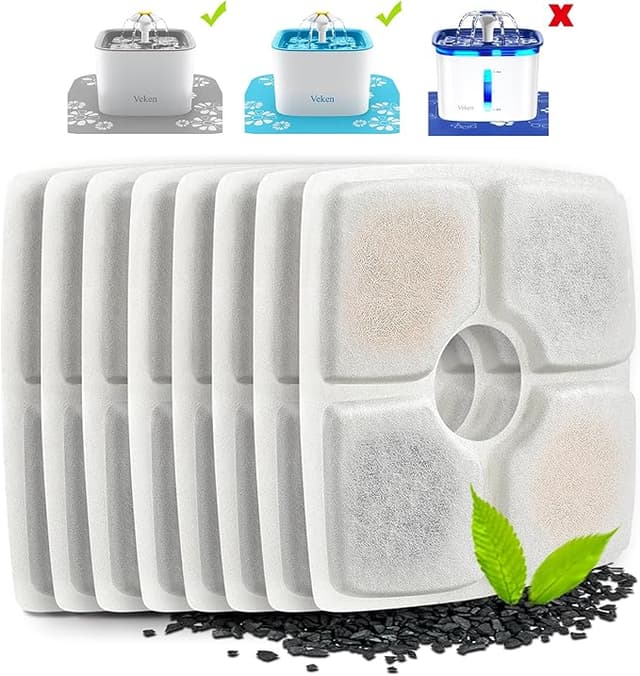
And here's my honest fit note: the compatible filter sits a hair looser in the compartment than the genuine Veken one did. Not loose enough to float or pop out — the lid holds it down fine once everything's assembled — but if you're the type who notices a millimeter of wiggle, you'll notice it. I gave the first one a gentle press to seat it and it's been fine through every refill since. It does the job. It's just not the glove-tight snap of the OEM pad.
Where it's a touch behind OEM
I'm not going to pretend these are identical. A couple of real things.
First, the smell. The first two or three days there's a faint plastic-and-charcoal odor — not strong, but it's there if you put your nose to it. It fades. By day three I couldn't detect it and neither, apparently, could my cat, since she drank right through it. But on day one I was a little nervous.
Second, the packaging is cheap. The filters come in a thin plastic sleeve, no fancy box, and a couple of pads in my pack had slightly squashed corners from shipping. Cosmetic — the carbon mesh was intact and they worked — but if you're expecting the tidy retail presentation of the branded pack, this isn't that. You're paying for the filter, not the box, and it shows.
Third — and this is the downside I'd actually weigh — the lifespan is a little less predictable than the branded ones. The Veken pads I used to buy felt like they hit the two-to-four-week mark consistently. With the compatible ones, in my harder tap water, I found myself swapping closer to the two-week end than the four-week end before the flow started to feel sluggish. That's not a dealbreaker, but it does narrow the savings a touch if you've got mineral-heavy water. I just kept an eye on the flow and changed them when the stream weakened instead of trusting the calendar. Honestly, you should be doing that with any filter, OEM or not.
A small habit that made these last longer
One thing I learned the hard way: rinse the foam side under running water once a week between full swaps. The carbon does the taste-and-odor work, but the foam catches all the hair, and once it mats up the whole fountain slows down and you'll blame the filter when it's really just clogged fur. Thirty seconds under the tap, squeeze it out, drop it back in. Doing that, I stretched most pads to the longer end of their life even in the gunky room. It's the difference between a filter that "died early" and one that just needed its face washed.
Who should skip these — and what I actually do
If your fountain is some oddball off-brand and you're not certain these fit the Veken-style compartment, double-check the dimensions before you buy — a loose-fitting filter that doesn't seat at all is worse than no savings. And if you've got a pet with a known sensitivity and your vet's told you to keep variables locked down, stick with the exact OEM and don't overthink it. The peace of a controlled setup is worth $13 to some people.
But for me, with a normal cat and a normal fountain? I'm not paying triple for a charcoal sponge. These compatible carbon filters trap the hair, kill the stale taste, keep the water from going slimy, and they cost a fraction of the branded refills — call it twenty bucks for what used to run me eighty-plus a year. They've got their quirks: the day-one smell, the cheaper packaging, the slightly loose fit, the lifespan you have to watch in hard water. I know all of them because I've lived with them. And I'd still buy these again. I have, three times now, and my cat's drinking like she's got something to prove.