Troubleshooting & Analysis
I stood in the pet aisle holding both, doing the dumb math in my head
It was a Tuesday and my cat had been ignoring her fountain for three days. The water looked fine to me — but cats know things we don't. So there I was, phone in one hand, two filter options on the screen. The Veken-branded pack. And the off-brand carbon refills that cost roughly half. I'd already replaced the pump once. I was not in the mood to gamble on a $9 mistake that made my cat sick. But I also wasn't thrilled about paying premium money for what is, at the end of the day, a little disc of foam and activated carbon.
I bought the compatible ones. I've now run them in my Veken fountain for the better part of a year. Here's the honest rundown, including the parts that annoyed me.
The price gap is the whole reason you're reading this
Let's be real about why anybody hunts for a compatible carbon filter in the first place. The math. A pet water fountain isn't a one-time cost — it's a subscription you didn't sign up for. You swap the filter every two to four weeks, which over a year is somewhere between thirteen and twenty-six filters. At that volume, even a few bucks per filter compounds into real money. When the per-filter cost drops by something like $0.50 to $1 each, you're looking at saving roughly $15 to $20 a year on one fountain. I run two. So for me it's closer to $35 annually, and that's the kind of number that makes the decision for you.
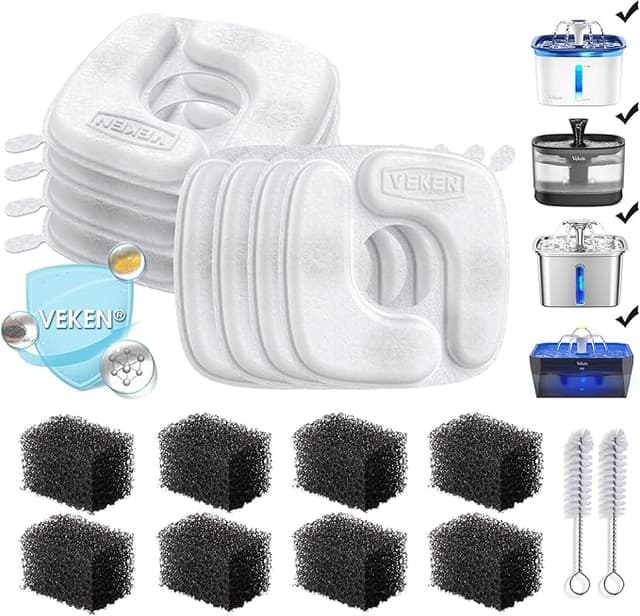
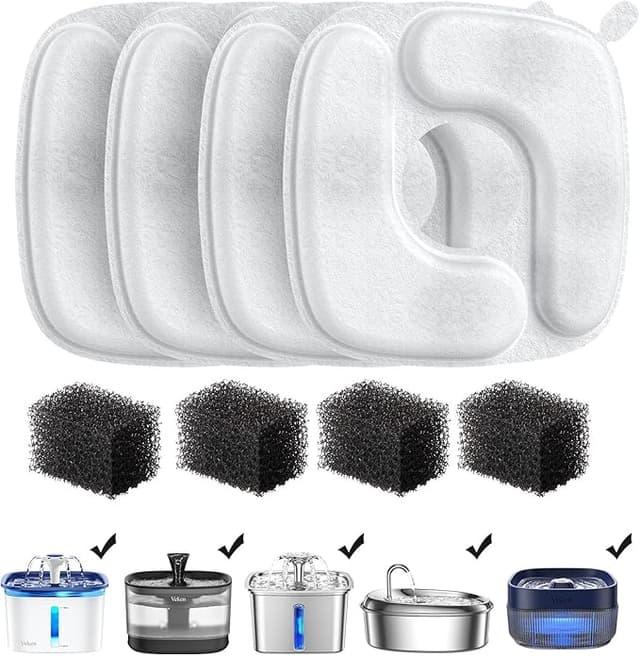
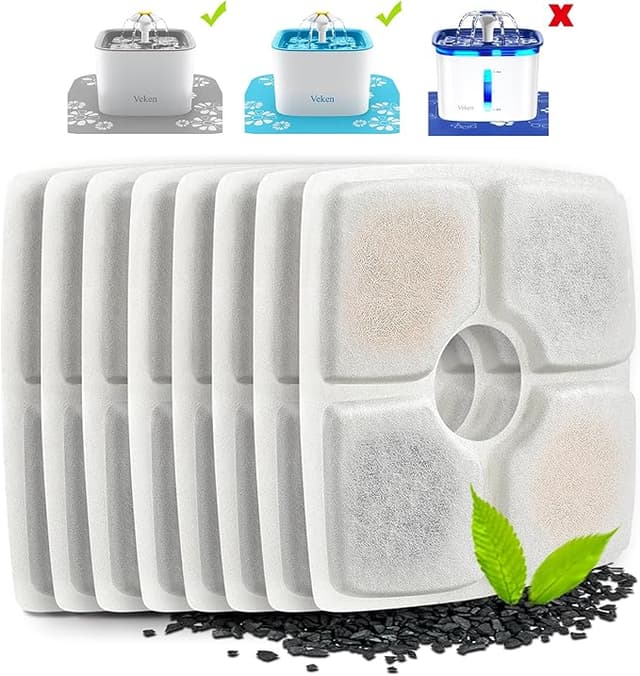
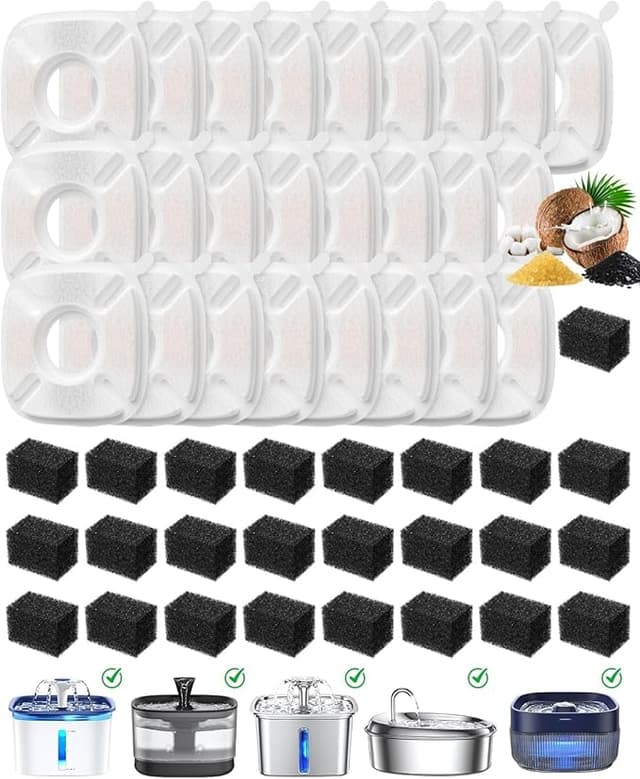
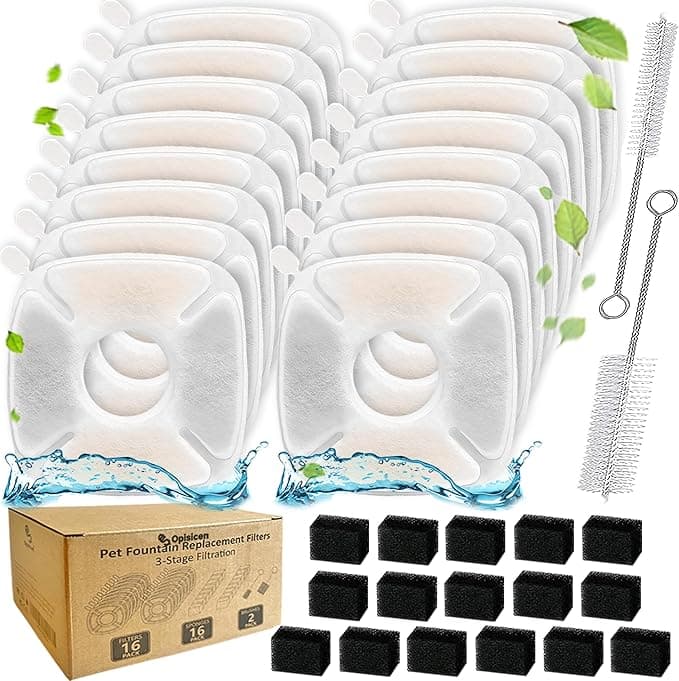
The triple-action job these are supposed to do — pull out hair, catch debris, knock down the off-tastes and smells that make a picky animal walk away — is not exotic. It's foam, ion-exchange resin, and activated carbon. The compatible discs I bought do that same job. I'll get to where they fall a hair short.
Fit and the soak-first step you cannot skip
The fit is the part everyone worries about, and on my unit it seated clean. Drops into the filter compartment, the basket clicks down over it, done. No trimming, no wedging, no praying.
One thing I learned the slightly-hard way: you have to soak these before you use them. The instructions say ten minutes in water, then a thorough rinse under the tap, and they mean it. The first time I got impatient and just rinsed quickly, the carbon dust hadn't fully flushed and my cat's water had a faint gray tint for a day. Not dangerous — it's just loose carbon fines — but it looked off and she gave it the suspicious sniff-and-walk-away. Soak it the full ten, rinse until the water running off runs clear, and the problem disappears entirely. With the OEM filters I'd been a little lazy and gotten away with it; with these, the soak-and-rinse step matters more. So just do it. It costs you ten minutes once a month.
How they actually perform — and where OEM still wins by a nose
Water clarity? Genuinely good. My fountain water stays clear, the cats drink, and I'm not fishing fur rafts out of the bowl between changes. The carbon does its job on taste and smell — my pickier cat went back to the fountain the same evening I put a fresh one in, which is the only review metric that actually counts in this house.
Where the OEM has a slight edge: longevity at the tail end. Around week three, the compatible filters start to load up with gunk a touch faster than the genuine ones did. By week four they're noticeably slimy if I push them that far. The OEM filters held that fourth week a little more gracefully. Honestly, though, you should be changing on the two-to-three week side regardless — a saturated filter isn't just gross, it's the actual problem you're trying to avoid. Which brings me to the part people skip.
Why a dead filter is the thing that actually matters
The reason your pet snubs the fountain usually isn't the filter brand. It's that the filter is finished. Once that carbon is spent and biofilm — that slimy buildup you can feel on the pump housing — starts colonizing, the water goes stagnant fast. Standing pet water breeds bacteria quickly, and cats and dogs have a nose for it long before we'd ever notice. A refusing pet is often a pet telling you the water's gone bad. So the single most important habit isn't which disc you buy — it's changing it on time and wiping the pump down every couple of weeks. The cheaper the filter, the easier it is to actually do that on schedule instead of stretching a pricey one an extra week out of guilt. That, quietly, is the best argument for the compatible ones: you replace them when you should, because it doesn't sting to.
The downsides, stated plainly
I'm not going to pretend these are flawless. The packaging is cheap — a thin plastic sleeve, sometimes the discs arrive a little compressed and you have to fluff them back. Quality-control varies pack to pack; in one batch of a dozen I had one filter with a slightly ragged foam edge. It still worked fine, but the OEM units were more uniform out of the bag. And as mentioned, the carbon-dust rinse-out is a touch fussier than the genuine article. None of these are dealbreakers. They're the small tax you pay for the lower price, and you should know about them going in rather than feeling cheated later.
So who should buy what
If you've got a single fountain, you change filters religiously on a long interval, and the few dollars genuinely doesn't register for you — stick with the Veken OEM filters. They're marginally more consistent and forgiving. No shame in it.
But if you're running multiple fountains, or you've ever stretched a filter an extra week because a fresh one felt expensive, the compatible carbon refills are the smarter buy. They do the same triple-action job, they fit my Veken without a fight, and the lower cost means I actually swap them on time — which is the thing keeping my cats drinking. I've reordered them three times now. For the money they save and the work they do, I'll keep grabbing these.