Troubleshooting & Analysis
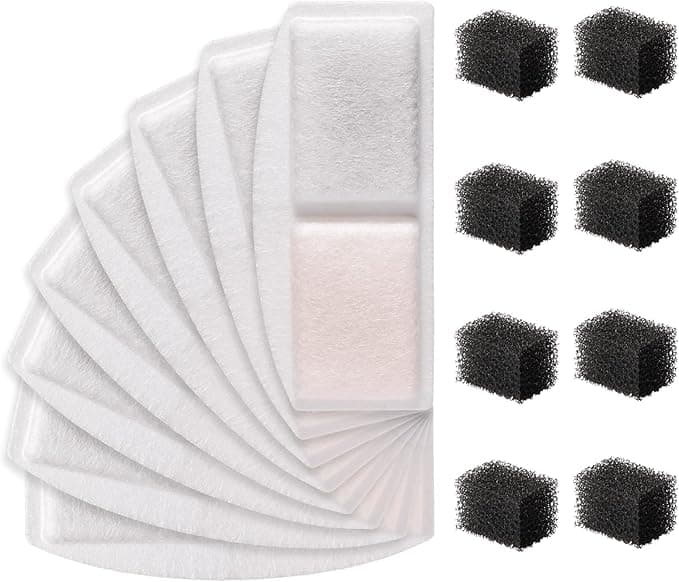
I stood at my kitchen counter with two little boxes in front of me and felt genuinely stupid about how long I was taking. On the left, the replacement filters sold under the fountain's own name — somewhere around $19 for a three-pack. On the right, a generic carbon pack that fit the same VEKEN fountain, $12 for six. Twice the filters for less money. And I just stood there, because the cheap one being half the price always sets off the same little alarm in my head: what's the catch, what did they cut, is this the thing that finally gums up the pump and kills the unit my cat actually drinks from.
I bought the cheap ones. I've now run them in two fountains for the better part of a year. Here's the honest version of how that went.
The math that made me stop overthinking it
You're supposed to swap a pet fountain filter every two to four weeks. I land closer to two if I've got both cats on it and the water's getting cloudy fast, closer to three or four in cooler months. Call it roughly 15 to 18 filters a year per fountain if you're being responsible about it.
Run that on the brand-store filters at about $6 to $7 each and you're staring down something like $90 to $110 a year, per fountain, just on little discs of carbon and cotton. The compatible carbon pack I've been using works out closer to $2 a filter. Same year, same swap schedule, lands around $30 to $36. That's a $60-plus gap annually, for one fountain. I have two. You can see why I stood at the counter doing arithmetic instead of just grabbing the "official" box.
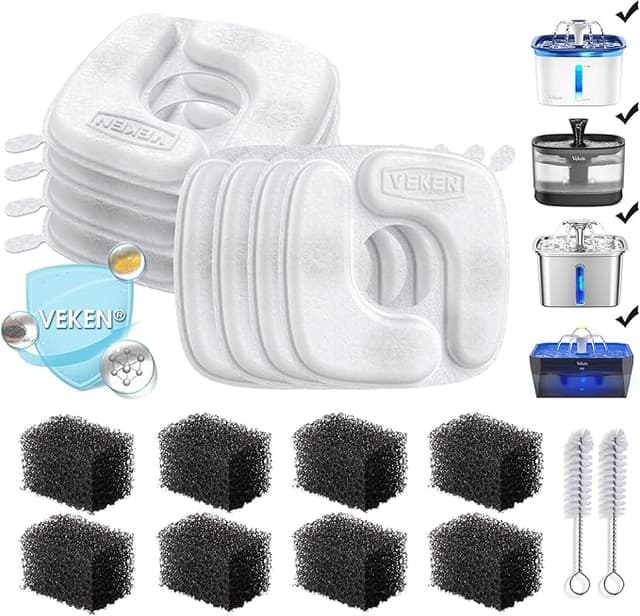
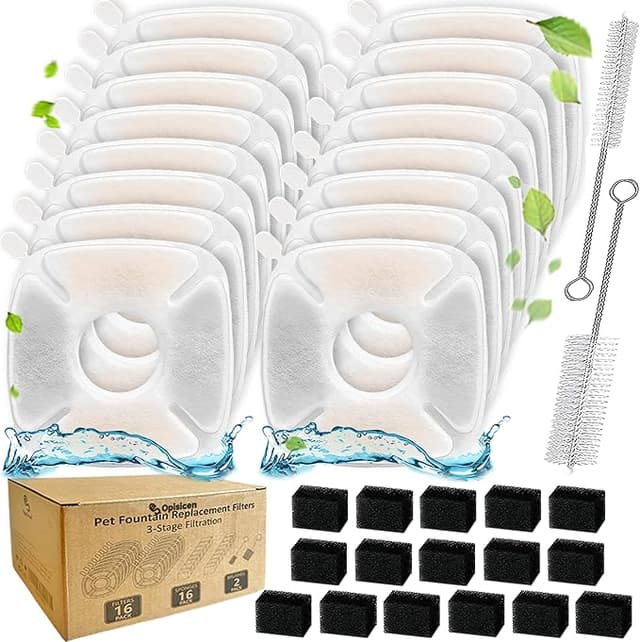
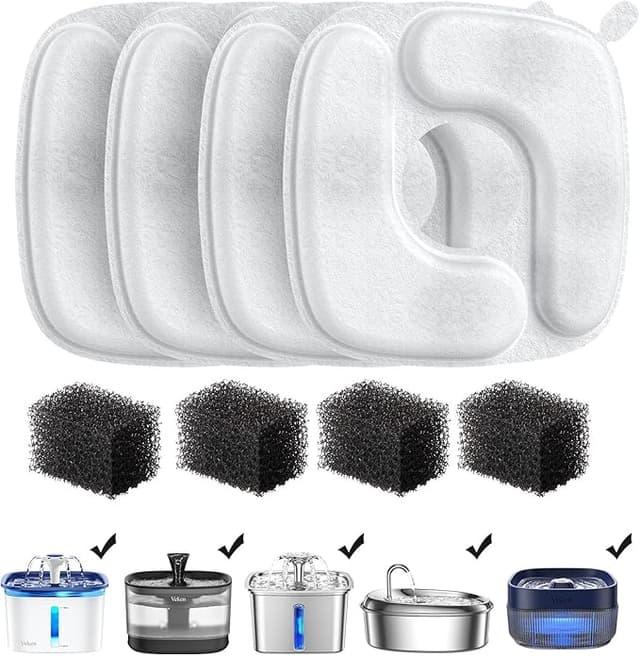
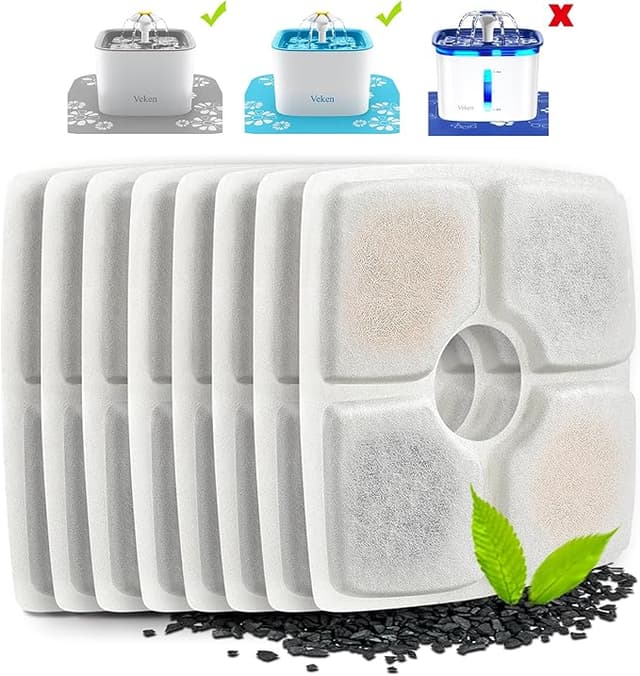
And the thing is — this isn't some exotic component. It's activated carbon, a foam pad, and a cotton layer in a plastic frame. The job is to pull hair, gunk, and that flat stale taste out of the water so your animal actually wants to drink. It is not a precision medical part. That mattered to how comfortable I felt going generic.
Does it actually seat right?
This was my real worry. A water filter that sits a millimeter proud doesn't just look wrong, it lets water route around it instead of through it, and then you're filtering nothing.
The compatible filter dropped into the VEKEN compartment with no fight. I do soak mine first — ten minutes in a bowl of water before it ever goes in — and honestly that step isn't optional with these. Dry carbon floats and sheds black dust into the water on day one if you skip it. Soak it, then rinse it hard under the tap until the water running off goes clear instead of grey. Then it presses into the compartment and sits flush. No gap, no rocking.
If I'm nitpicking, and I am, the frame on the generic is a hair less rigid than the name-brand one. The branded filter has a slightly stiffer plastic edge that snaps into the slot with a more confident feel. The compatible one seats just as flush but feels a touch flimsier going in — like the difference between a name-brand zip bag and the store one. It holds position fine once water's flowing and the pump's pulling it down. It just doesn't give you that reassuring little click. After a week you stop noticing.
How it performs once it's running
Water clarity: I genuinely can't tell the two apart. Both keep the bowl clear, both catch the cat hair and the bits of kibble that get batted into the water, both kill that stagnant smell that makes a fountain gross by day three if it's running empty. My pickier cat — the one who used to paw at the water and walk off — drinks from it the same as she did on the official filters. That was the test I actually cared about, and the cheap filter passed it.
Where it's a touch behind: lifespan at the tail end. The branded filter feels like it holds its carbon a little longer into week three. The compatible one does the job through about two and a half weeks and then you can start to feel it slipping — water tastes a little flatter to me, buildup creeps back a bit faster on the fountain walls. Since I'm swapping every two to three weeks anyway, this basically never bites me. But if you're the kind of person who stretches a filter to its absolute limit, the generic gives you a little less runway at the end.
The downside I want you to hear before you buy
The packaging is cheap and the quality control isn't perfectly even. That's the real cost of going generic, and I'd rather say it than pretend.
The six come loose in a thin plastic sleeve, not individually sealed, so you're trusting that they stayed clean in the box. And across the packs I've bought, maybe one filter in fifteen had a slightly thin spot in the carbon fill or a frame edge that wasn't molded perfectly clean. Not enough to leak water around it, but enough that I noticed and set it aside as the "use it next, watch it" one. The official filters, in my experience, are more uniform tray to tray. You're paying part of that price premium for consistency, and that's a real thing you're giving up.
The other one: that first-soak step really is mandatory here, more than with the pricier filters. Skip the ten-minute soak and the rinse and your pet's first drink is faintly grey carbon water. It's not dangerous, but it looks alarming and your animal will refuse it. Two extra minutes at the sink fixes it completely — but you have to actually do it.
Why none of this is something to wave off
Here's the part people skip until it bites them. A pet fountain running a saturated, past-its-date filter isn't neutral — it's worse than no fountain. The carbon stops pulling anything out, hair and biofilm build up in the pump, and you get that slimy ring around the reservoir. Stagnant, slick water is exactly where bacteria multiply, and a cat that suddenly won't drink from a fountain she used to love is often reacting to that before you can even see it. Urinary issues in cats trace back to under-drinking more often than people realize.
So the filter you choose matters less than the schedule you actually keep. And that's the quiet argument for the cheap pack: when filters cost two bucks instead of seven, you swap them on time instead of guiltily stretching the "official" one an extra week because you don't want to burn another $6. The compatible filter made me a better fountain-owner, just by removing the reason to procrastinate.
So who should buy what
If you've got one fountain, you're forgetful about swaps, and you'd rather pay a premium to never think about quality variance — buy the branded filters. The consistency is real, and the extra cost over a single fountain is, what, fifty bucks a year. Some people would rather just not deal with it, and that's a fair call.
But me, with two fountains and a clear head about what this part actually does? I buy the compatible carbon pack, soak each one properly, and swap it every two to three weeks like I'm supposed to. Same clear water, same cat drinking happily, sixty-plus dollars a year back in my pocket per fountain. I stood at that counter overthinking it once. I don't anymore — I just reorder the cheap ones. And I have.